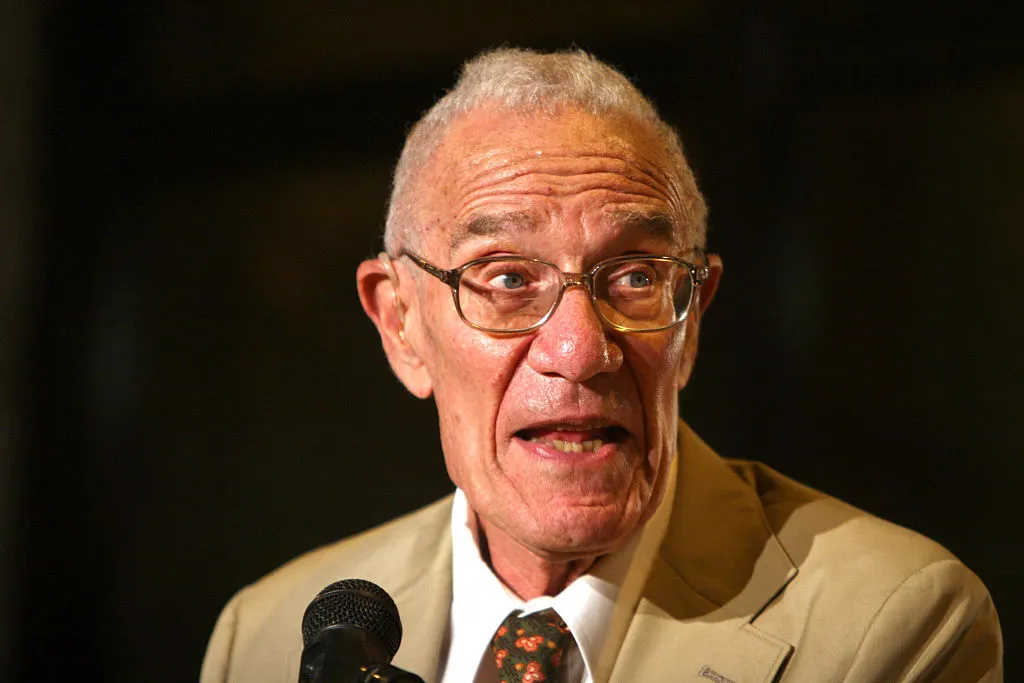
Robert M. Solow’s economic research made him a respected voice on public policy, particularly on matters of employment.
https://www.bnnbloomberg.ca/company-news/video/tech-firms-warning-of-coronavirus-impact~1909974
Robert Merton Solow: Unveiling the Secrets of Economic Growth
Robert Merton Solow (1924-2023) was an American economist whose groundbreaking work on economic growth earned him the Nobel Memorial Prize in Economic Sciences in 1987. His life and career were dedicated to understanding the complex forces that drive economies forward, leaving behind a legacy that continues to shape our understanding of the world around us.
Early Life and Academic Pursuits
Solow was born in Brooklyn, New York, in 1924 and grew up surrounded by the vibrant energy of the city. He developed a love for learning early on, excelling in his public school education. This passion led him to Harvard University, where he initially studied sociology and anthropology before discovering his true calling in economics.
At Harvard, Solow encountered the giants of economic thought, including Paul Samuelson and Joseph Schumpeter. Their influence helped him develop his own unique perspective on economics, one that focused on understanding the long-term dynamics of economic growth.
The Solow Model: A Revolution in Economic Thinking
Solow’s magnum opus, published in 1956, was a paper titled “A Contribution to the Theory of Economic Growth.” In this seminal work, he introduced the now-famous Solow model, a mathematical framework that elegantly captured the interplay between physical capital, labor, and technological progress in driving economic growth.
The Solow model had a profound impact on economic thinking. It highlighted the importance of technological advancements in sustaining long-term growth, challenging the belief that economies could perpetually expand simply by adding more capital and labor. The model also sparked intense debate, with some economists questioning its assumptions and predictions.
Beyond the Model: A Broader Vision
Solow’s contributions to economics extended far beyond the Solow model. He wrote extensively on a wide range of topics, including resource depletion, environmental economics, the aging population, and the theory of income distribution. He was also a tireless advocate for policies that promote sustainable development and technological innovation.
Solow’s work had a significant impact on policymakers around the world. His insights helped shape government policies on education, research and development, and environmental protection. He was a respected advisor to presidents and policymakers, and his voice carried weight in the halls of power.
A Legacy that Endures
Robert Merton Solow’s life and work serve as a testament to the power of intellectual curiosity and the transformative potential of economic thinking. His legacy continues to inspire economists, policymakers, and anyone interested in understanding the complex forces that shape our world.
Solow’s story is one of dedication, brilliance, and a lifelong pursuit of knowledge. He leaves behind a rich tapestry of ideas that will continue to guide us as we grapple with the challenges of the 21st century and strive to build a more prosperous and equitable future for all.
I hope this revised version with images provides a more comprehensive and engaging biography of Robert Merton Solow.