
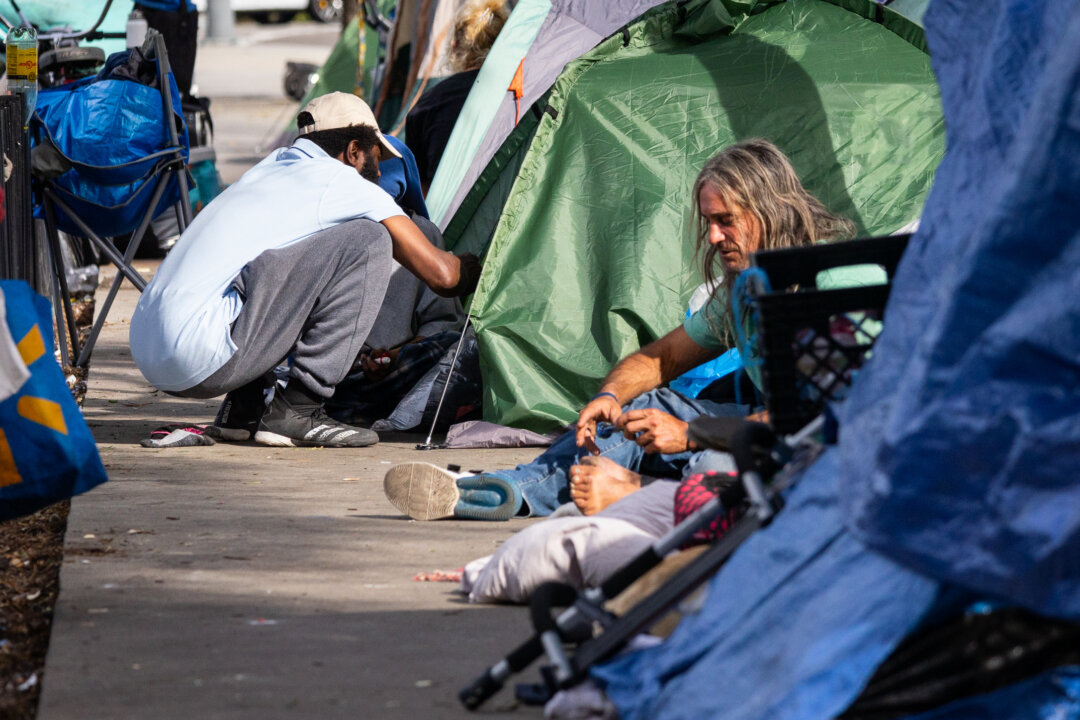
Homelessness has risen sharply in the United States, with a report from House and Urban Development (HUD) indicating that around 653,000 people were homeless, the highest number on record.
Inflation combined with the end of pandemic-era protections against eviction were the key culprits identified in the HUD report, released on Dec. 15. Another major factor noted in the report was the housing supply crunch.
HUD’s annual 2023 Point-in-Time Count, which measured homelessness on a single night in January 2023, showed a 12 percent rise in homelessness (or by 70,650 individuals) compared to a year earlier. This sent the total to 653,104 homeless people, the highest since the agency launched the point-in-time gauge in 2007….
Homelessness in the US Hits Record High: A Look at the Causes and What Needs to Change
Homelessness in the United States has reached a new and alarming high. According to the Department of Housing and Urban Development (HUD), a staggering 653,000 people were experiencing homelessness on a single night in January 2023. This represents a 12% increase from the previous year and the highest number ever recorded since HUD began tracking this data in 2007.
What’s driving this surge? The HUD report identifies three key culprits:
- Inflation: The skyrocketing cost of living, fueled by inflation, is making it increasingly difficult for people to afford housing. This is particularly true for low-income individuals and families who are already struggling to make ends meet.
- End of eviction protections: The expiration of federal eviction moratoriums put in place during the pandemic has led to a wave of evictions, pushing more people onto the streets.
- Housing supply crunch: A chronic shortage of affordable housing options across the country is exacerbating the problem. With demand outpacing supply, even those who can afford rent are struggling to find secure housing.
The consequences of this crisis are far-reaching. People experiencing homelessness face numerous challenges, including:
- Lack of access to basic necessities like food, water, and shelter
- Increased risk of physical and mental health problems
- Difficulty finding and keeping jobs
- Limited access to education and other essential services
What needs to be done? Addressing this complex issue requires a multi-pronged approach, including:
- Investing in affordable housing: Building more affordable housing units and expanding government assistance programs can help prevent people from falling into homelessness in the first place.
- Strengthening tenant protections: Implementing stronger eviction protections and rent control measures can help ensure that people who are already housed don’t lose their homes.
- Providing supportive services: Offering resources like mental health care, job training, and addiction treatment can help people experiencing homelessness rebuild their lives and transition into stable housing.
Homelessness is not an inevitable reality. By acknowledging the causes of this crisis and taking decisive action, we can work towards a future where everyone has access to safe and affordable housing.
Here are some additional resources you may find helpful:
- National Alliance to End Homelessness: https://endhomelessness.org/
- United States Interagency Council on Homelessness: https://www.usich.gov/
- The National Low Income Housing Coalition: https://nlihc.org/
Let’s work together to end homelessness in the United States. Every person deserves a safe place to call home.